

Struggling with acne?
If you're exhausted from trying product after product without seeing lasting results, you're in the right place. As an acne specialist, I believe clear skin is possible with the right education, professional guidance, and a customized treatment plan. Browse these free resources to start learning what your skin really needs and how to set yourself up for long-term success.
What is acne?
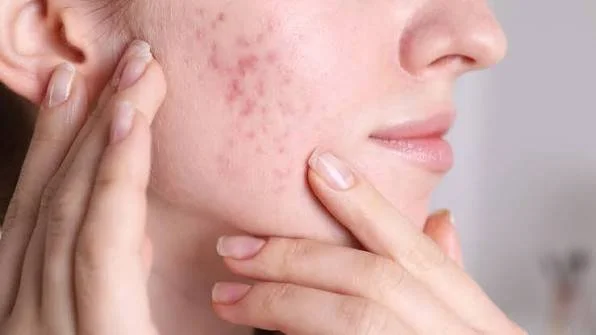
Acne is an inherited disorder of the pores where dead skin cells shed much faster than normal. Normal pores shed approximately 1 layer of dead skin cells per day inside the pore. Acne-prone pores shed up to 5 layers of dead skin cells per day, causing buildup. This buildup forms a microcomedone, which is where all acne lesions begin. That microcomedone turns into blackheads or whiteheads under the skin; and if bacteria is present, it feeds on the dead skin cells and oil, creating inflamed pimples or pustules, and possibly cysts. This process can take up to 90 days.
Lifestyle Choices That Can Affect Acne
-
Get enough rest and reduce your stress. Stress stimulates the adrenal gland which promotes oil production that can lead to clogged pores in the acne-prone individual.
-
Fabric softeners (liquid or dryer sheets) leave a waxy residue on pillowcases, towels, wash cloths, sheets, and any other fabric comes into direct contact with the skin. This residue
-
Detergents with fragrance can cause skin irritation. Fragrance-free detergents are a better choice. Remember to check the ingredient list of the detergent you choose and against Face Reality’s Pore Clogging Ingredients list below.
-
It is good practice to change your pillowcases often. Oil and other products (such as hair care) can leave build up and contribute to clogged pores.
-
If you are using a pore-clogging (comedogenic) hand lotion then leaning your face on your hands or sleeping on your hands, this could exacerbate your acne
-
There is some evidence that water softeners can lead to acne, especially those containing high amounts of potassium chloride
-
Swimming pool disinfectants contain iodides and chlorine which can remain in the water, causing skin problems for frequent swimmers. Consider applying a thin layer of petroleum jelly over your sunscreen before you get into the pool.
-
Although sun exposure causes desirable scaling and drying, it also damages the follicle, exacerbates dark spots, and causes skin cancer and premature aging. Always wear sunscreen, even if it’s overcast and/or raining.
-
Recreational drugs that may exacerbate acne include marijuana, cocaine, and amphetamines (speed).
-
Coal tars (roofers), grease (mechanics, cooks, waiters), chlorinated industrial chemicals, and dioxin can exacerbate acne.
-
Many lip balms, toothpastes, and even facial tissues have comedogenic ingredients in them. If you see breakouts around your mouth area, one of these products may be the culprit. We recommend petroleum jelly as a lip balm and toothpaste without SLS (sodium lauryl sulfate). Many well-known tissue brands are infused with things like coconut oil, isopropyl myristate, and SLS, all of which will clog the pores.
-
Rub ice on pustules and pimples for a couple of minutes, twice a day. IMPORTANT: if you pick, squeeze, and break the skin, that scab will leave a red or dark mark that will be there for months longer than if you left it alone.
-
Forms of birth control that contain low doses of estrogen can be higher in androgen hormones, and that combination may aggravate acne-prone skin. Certain forms of birth control are FDA approved to treat acne. Please speak with your doctor about the birth control method that will be best for you. You should also familiarize yourself with the benefits and risks of any birth control. Progesterone hormone replacements may exacerbate acne. If you have Polycystic Ovarian Syndrome, it can cause hormonal changes and breakouts
-
Prescription drugs that may exacerbate acne include some topical and oral steroids, anticonvulsants, thyroid medications, fertility drugs, Isoniazid, Imuran, Danazol, Gonadotrophin, Cyclosporin, Disulfiram, and drugs that treat ADD/ADHD.
Other topical prescription drugs that must be discontinued at least 14 days prior to receiving a treatment or starting Face Reality Skincare active products include Azelex, Finacea, Retin-A, Tazorac, Differin, Clindamycin (Cleocin-T), Erythromycin (Erygel), Dapsone (Aczone). This includes any topical treatment from Proactiv or Curology, that is not benzoyl peroxide only.
If you are taking oral Isotretinoin consult your Acne Expert for guidance on how long you must wait after discontinuing use prior to starting treatments and active products.
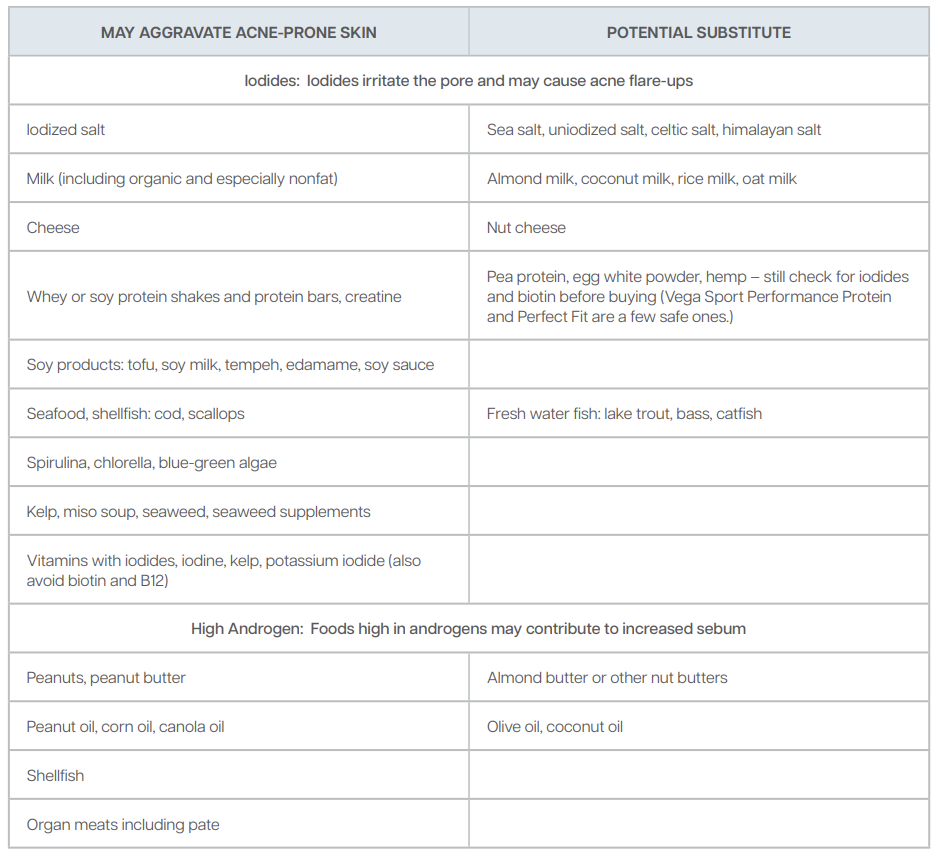
This is a guideline only. We are not asking you to eliminate foods or food groups completely; we do suggest you cut back and moderate some food types. The “May Aggravate Acne-Prone Skin” group has been a problem for many people who experience acne. We also know that some people have trigger foods such as citrus, but this is not across the board.
Food and Supplements That Can Affect Acne
Pore-Clogging Ingredients
Below is a list of ingredients that can be found in skincare products, makeup, and hair products that can clog your pores and may exacerbate acne. Always check the ingredients of any non-Face Reality products you use on your skin or hair, even if it says “Won’t Clog Pores” or “Non-Comedogenic” on the bottle.
Natural oils can be some of the worst offenders (like cocoa butter and coconut oil) and are found in many “organic” skin care lines. Other oils such as jojoba, olive, and lanolin are mildly comedogenic and can be a problem if formulated with other comedogenic ingredients. Some prescription products like the cream form of Retin-A, as well as many over-the-counter acne medications also contain pore clogging ingredients. “Oil-free” products can be formulated with pore-clogging ingredients. The following list is meant as a guideline
• Acetylated Lanolin
• Acetylated Lanolin Alcohol
• Algae Extract
• Algin • Butyl Stearate
• Carrageenan
• Cetyl Acetate
• Cetearyl Alcohol + Ceteareth 20
• Chondrus Crispus (aka Irish Moss or Carageenan Moss)
• Chlorella • Coal Tar • Cocoa Butter • Coconut Alkanes
• Coconut Butter
• Coconut Oil
• Colloidal Sulfur
• Cotton Seed Oil
• D & C Red # 17 • D & C Red # 21
• D & C Red # 3
• D & C Red # 30
• D & C Red # 36
• Shark Liver Oil (Squalene)
• Shea Butter
• Sodium Laureth Sulfate
• Sodium Lauryl Sulfate
• Solulan 16
• Sorbitan Oleate
• Stearyl Heptanoate
• Steareth 10
• Decyl Oleate
• Dioctyl Succinate
• Disodium Monooleamido PEG 2- Sulfosuccinate
• Ethoxylated Lanolin
• Ethylhexyl Palmitate
• Glyceryl Stearate SE
• Glyceryl-3 Diisostearate
• Hexadecyl Alcohol
• Hydrogenated Vegetable Oil
• Isocetyl Alcohol
• Isocetyl Stearate
• Isodecyl Oleate
• Isopropyl Isostearate
• Isopropyl Linolate
• Isopropyl Myristate
• Isopropyl Palmitate
• Isostearyl Isostearate
• Isostearyl Neopentanoate
• Sulfated Castor Oil
• Sulfated Jojoba Oil
• Wheat Germ Glyceride
• Wheat Germ Oil
• Xylene
• Stearic Acid Tea
• Spirulina
• Kelp
• Laminaria Digitata Extract
• Laminaria Saccharina Extract (Laminaria Saccharine)
• Laureth-23 • Laureth-4
• Lauric Acid
• Mink Oil
• Myristic Acid
• Myristyl Lactate
• Myristyl Myristate
• Octyl Palmitate
• Octyl Stearate
• Oleth-3
• Oleyl Alcohol
• PEG 16 Lanolin
• PEG 200 Dilaurate
• PEG 8 Stearate
• PG Monostearate
• PPG 2 Myristyl Propionate
• Plankton
• Polyglyceryl-3 Diisostearate
• Potassium Chloride
• Propylene Glycol Monostearate
• Red Algae • Seaweed
• Soybean Oil (Glycine Soja)